General Information
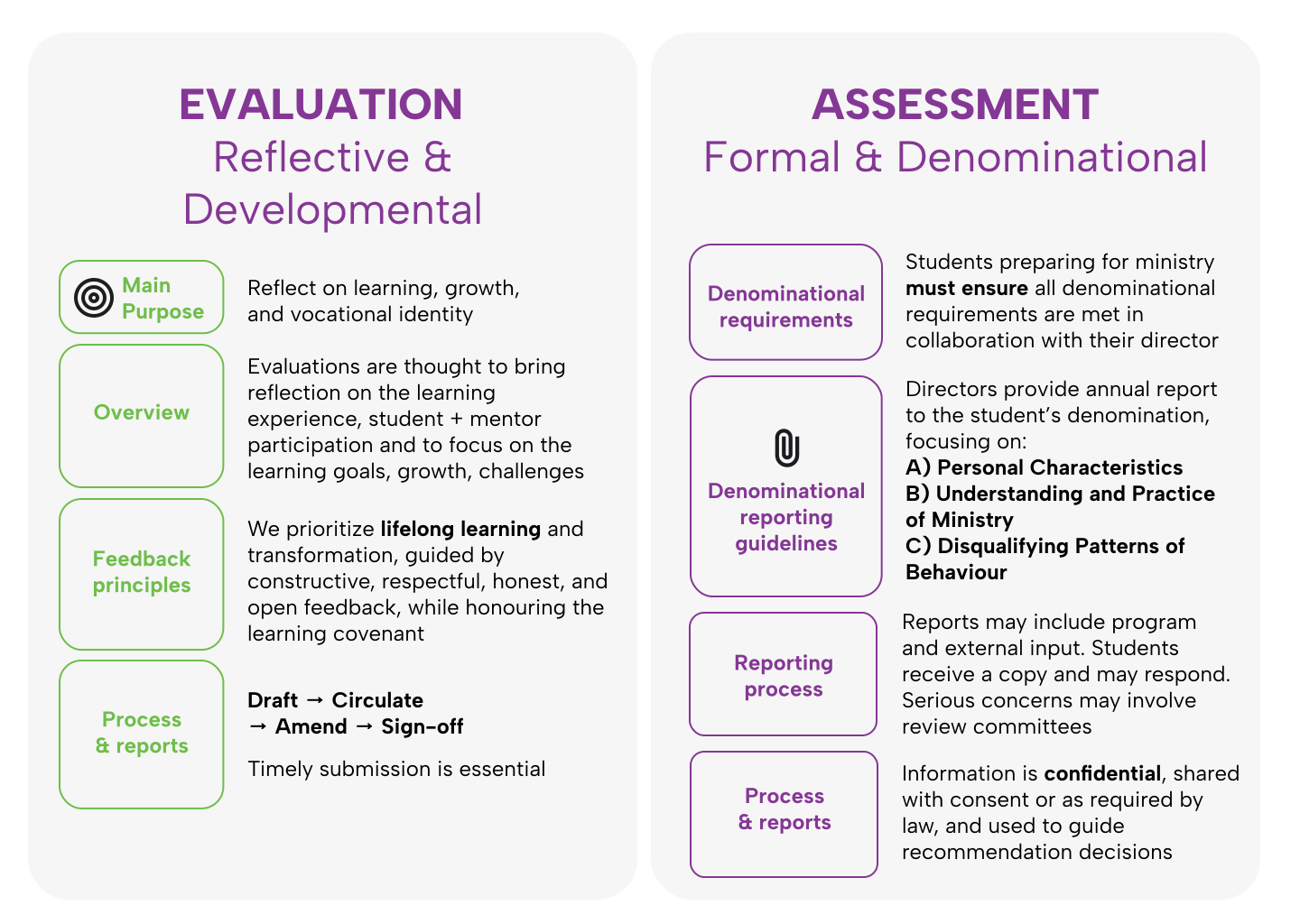
Evaluation involves a formal process of reflecting on the learning experience in order to make meaning of it. The student and mentor/supervisor participate in a process that allows the student to reflect on their functioning in ministry in a given context. In turn, the experience contributes to the student’s on-going self-awareness and construction of a vocational identity. Goals attained and unfinished tasks are named during the evaluation process. Areas of growth and on-going challenges are also identified. If possible, the evaluation process at the end of the final term may be concluded with an exercise of intentional closure and leave-taking (perhaps in the context of the Sunday worship service, or a staff meeting at an agency).
Constructive feedback can empower mentors/supervisors and students alike and can contribute to life-long learning, transformation and faithfulness. Feedback must be constructive, respectful, honest and open.
Students and mentors must deal with issues of concern as they arise, so they can be resolved as soon as possible. Feedback on any topic that is not included in the Learning Covenant must be negotiated with the student before it is offered.
Evaluation Process and Written Reports
Guidelines and processes for student evaluation on the TFE forms will be provided to the mentors/supervisors and are also available from the student. Written reports should contain information and only comments or concerns that have been discussed with the student during scheduled meetings. Reports should not include issues or concerns that have not been raised already with the student.
We recommend that each party prepare a draft of their report that they circulate to each other, and then, if necessary, amend. All reports are signed to indicate that they have been read, understood and discussed. “Signing-off” on a report indicates that both parties have reached consensus. It does not indicate that the signing parties agree 100% with the report, but that they can live with the report’s conclusions. Students and mentors must report any disagreements that arise during the evaluation process. You may need to schedule additional meetings to resolve any disagreements or conflicts. In the event of a disagreement, evaluation reports must include a signed addendum outlining the nature of the disagreement, the process followed to date and steps planned to resolve the disagreement.
In addition to scheduled meetings with mentors and supervisors, the Director of Theological Field Education is available to students and mentors/supervisors for consultation and conflict resolution (604-822-9035 or mnichol@vst.edu).
The TFE Director will review all reports. The Director will report completion or non-completion of TFE Units to the registrar’s office. It is greatly appreciated by VST and students when mentors/supervisors write their reports in time for the students to meet all due dates (most crucial are dates for graduation).
Students are responsible for the submission of reports in a timely manner. Please note due dates for mid and end-of-year reports listed in the Field Education Calendar.
Denominational Requirements
For students preparing for ministerial leadership in a denomination in which they are a candidate or postulant, there are specific outcomes and requirements that may be required. Many of these are satisfied within TFE-P: Leadership in Practice / The Studio (PT651 and PT652) and TFE-FC: Leadership in Faith Community, however, students will need to ensure that all relevant areas are covered. Students are advised to discuss this with their Director of Denominational Formation.
Denominational Reporting Guidelines
Directors of Denominational Formation will report to a student’s denomination throughout the student’s entire program.
The primary criteria included in reports are:
A) Personal Characteristics,
B) Understanding and Practice of Ministry, and
C) Disqualifying Patterns of Behaviour.
Reports may also include consideration of information obtained through a student’s participation and performance in VST programs of study as well as relevant information that is provided to VST from community members or other external sources.
Normally, an annual report will be submitted by the student’s Director of Denominational Formation to the appropriate Denominational Officials. Students will be provided with a copy of the annual report when it is released to Denominational Officials. Students may provide a supplemental statement in response to the annual report which will be provided to the Denominational Officials with the annual report.
If the Faculty/Student Review Committee identifies any serious concerns, the student shall be notified and may be referred to the Dean’s Advisory Council, in consultation with the student’s Director of Denominational Formation, for consideration of appropriate remediation or other action.
Access to the Recommendation Decision and Record
Students entering the MDiv are required to submit an application for denominational reporting at the time of their admission to VST. The MDiv application includes the student’s written authorization for the collection, use and disclosure of their personal information to appropriate Denominational Authorities for the purposes of the reporting process.
Any information obtained for the purposes of denominational reporting will be treated as confidential and will not be disclosed, except with the student’s consent or to the extent that such disclosure is authorized or required by law, including in accordance with the provisions of the Personal Information Protection Act.
Guidelines for Denominational Reporting
A) Personal Characteristics
- Faithfulness to Persons and Tasks: Respects and cares for others. Values ideas and needs of others. Practices adequate self-care. Communicates honestly. Demonstrates leadership abilities.
- Personal Integrity: Demonstrates authenticity, sincerity and congruity in word and deed.
- Personal Responsibility: Maintains commitments, schedules, promises, inner convictions. Manages personal finances in a responsible way. Accepts responsibility for mistakes. Shows consistency in responses to persons and circumstances.
- Flexibility: Adaptive to new situations and contests. Copes well with the unexpected. Able to relate to a wide variety of people, e.g., age, gender, cultures, economic status, etc.
- Gifts of Caring: Sensitive to needs and feelings of other people. Encourages others to share their problems and to seek appropriate help/support. Helps others evaluate options and make their own decisions. Speaks the truth in love.
- Self-Awareness: Aware of how others perceive her or him. Able to solicit honest feedback. Able to be self-critical.
B) Understanding and Practice of Ministry
- Vocational Clarity: Has a clear vocational identity and direction. Gives evidence of spiritual growth and development. Has a disciplined life of prayer. Able to articulate a well-grounded personal faith.
- Mission of the Church: Demonstrates support for the mission of the church. Committed to public ministry. Concerned about justice issues. Cares for the marginalized, the alienated and the needy.
- Denominational Collegiality: Feels at home in her or his denomination and is familiar with the denomination’s ethos and history. Can work within denominational structures. Is respectful of other traditions within her or his denomination and of other denominational and faith traditions.
- Coping with Stress/Conflict/Life Crises: Understands conflict as an inevitable part of community life. Seeks fairness, openness and good communication in a conflict situation. Deals with stress in a balanced, healthy way. Is constructively supportive when others ask for help.
C) Disqualifying Patterns of Behaviour
- Pursuit of Personal Advantage: Inappropriately manipulates institutional structures to meet personal needs. Tries to control situations to an inappropriate degree. Rejects others’ needs or desires and aggressively pursues their own.
- Inappropriate Self-Protective Behaviour: Under stress becomes guarded and secretive or, alternatively, aggressive and bullying. Excessively self- interested. Inflexible about schedules, appointments, etc. Tends to shift blame to others or to circumstances.
- Aggressive/Abusive Behaviour: Attacks persons not issues. In intense situations consistently bursts with anger or withdraws in hostility.
These criteria are shared with mentors/supervisors to guide their assessment of students engaged in Theological Field Education. Students receive information on this during Orientation.
More information on this and the Faculty Student Review Committee can be found in the Student Handbook at: https://vst.edu/students/current/academics/handbook.
Check more related resources
Assumptions and Definitions
LEARN MOREDescription of the Mentor/Supervisor Role
Vancouver School of Theology is indebted to ministry leaders in congregations and organizational leaders in social agency placements who volunteer their services as mentors/supervisors of students in their field placements.
LEARN MOREProgram Requirements
LEARN MORE