Theological Reflection
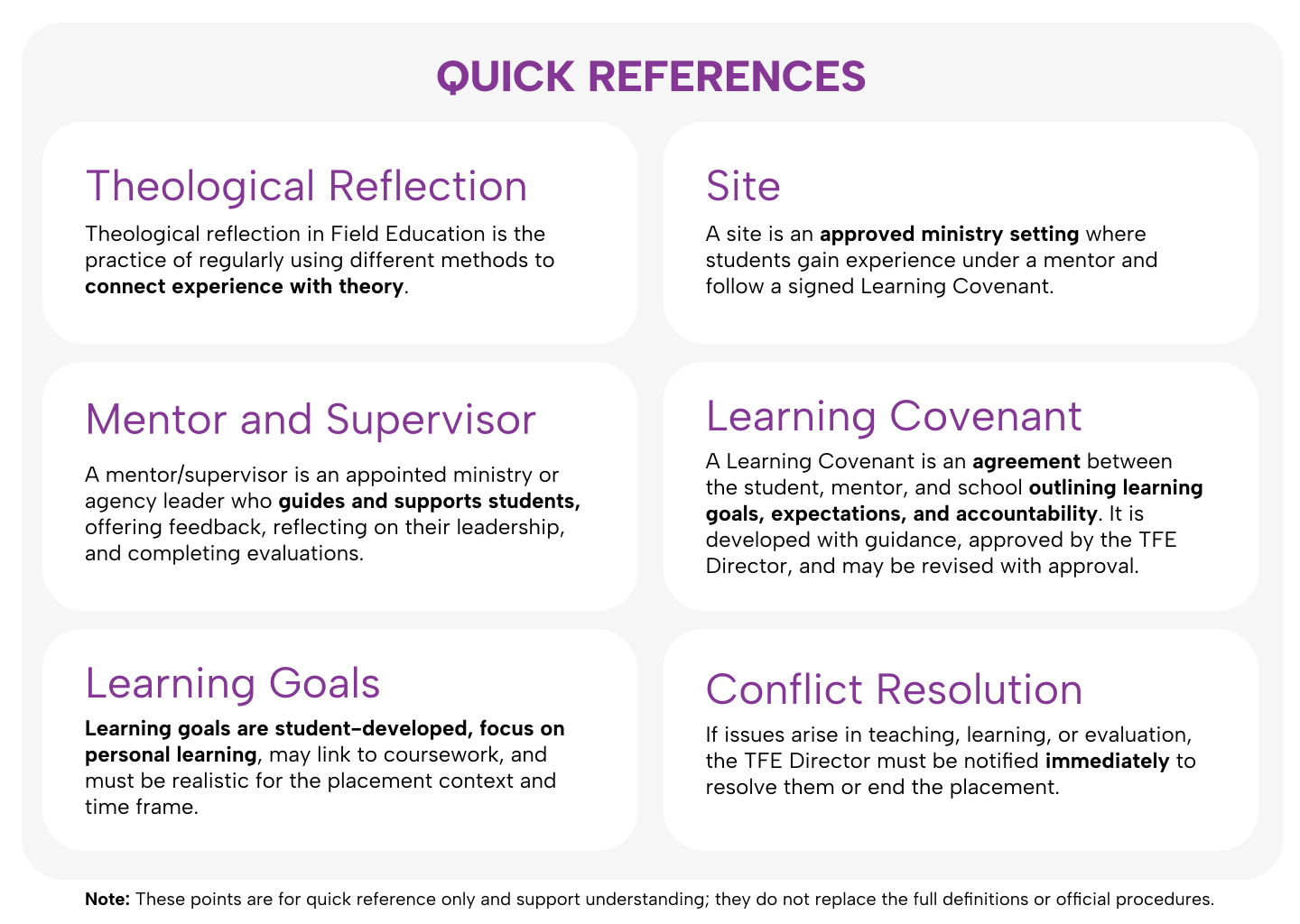
A key component in Theological Field Education is the development of skill and the habit of doing theological reflection. This requires a commitment of time and use of varied methods in order to assist the student to integrate experience and theory. See ‘Theological Reflection’ Resource for some examples of different frameworks to approach theological reflection.
Learning Community / Site
A learning community (site) is a setting for ministry (congregation, parish, hospital, prison, service and/or social agency, etc.) that has been approved by the Director of Theological Field Education for a student placement. Field Education sites provide placements for students under the guidance of a mentor as they experience ministry firsthand and complete specific learning goals. Sites will be chosen that demonstrate a willingness for mutual learning and analysis. An approved Learning Covenant is required for each site annually. This covenant must be signed by a legal representative of the congregation’s governing board i.e. The Chair of Council, the Warden, an appointed Elder.
Mentor and Supervisor
A mentor/supervisor is a lay, commissioned, ordered or ordained person serving in ministry or a social agency who provides on-site guidance and support to field placement students. She/He/They is appointed by and accountable to the Director of Theological Field Education for this purpose. Mentors/supervisors offer their students support and feedback through a disciplined educational process in which they reflect on all aspects of the student’s ministry leadership at the field placement site. Mentors/supervisors also assist VST by contributing written evaluations by the due dates.
Learning Goals and Learning Covenant
Learning Goals:
- are developed by the student in consultation with the TFE Director and others as appropriate (Director of Formation, denominational representatives)
- are specific to the student and focus on the student’s learning
- if required, need to connect to any practical theology course connected to the TFE unit.
- need to be manageable and appropriate to the scope of time and the context of the field placement site and context.
Learning Covenant:
- is a contractual agreement concerning terms of accountability between a student, mentor and the School, which includes the specific Learning Goals (above) that the student will strive to achieve during a field placement.
- is developed by a student in consultation with their mentor and the TFE Director.
- must be approved by the TFE Director as do any subsequent amendments to the Covenant.
- may be reviewed mid-year with the approval of the mentor/supervisor and TFE Director. A draft of any changes to the Covenant, stating the reasons for the revisions, must be submitted to the TFE Director when the mid-year evaluation report is submitted.
- serves to clarify expectations of both student and mentor, as well as the focus of the placement.
- includes the Site Covenant, which is the agreement between the student, school and the site and must be signed by a legal representative of the congregation’s, organization’s or agency’s governing board (i.e. The Chair of Council, the Warden, an appointed Elder. Board Chair).
Conflict Resolution
If any part of the teaching, learning or evaluation process breaks down, the Director of Theological Field Education must be notified immediately. Upon notification, a consultative process will be initiated to resolve the differences or to terminate the field placement agreement.
Related Resources
Educational Philosophy
LEARN MOREConstructive Feedback
What are the key characteristics and importance of constructive feedback in theological field education?
LEARN MORETFE Program: Goals, Organization, Descriptions
LEARN MORETheological Reflection
LEARN MORE